Payment Networks Linking Mobile Slot Reels, Live Dealer Streams, and Sports Event Wagers
Casey Baumann · Jun 10, 2026
Payment Networks Linking Mobile Slot Reels, Live Dealer Streams, and Sports Event Wagers
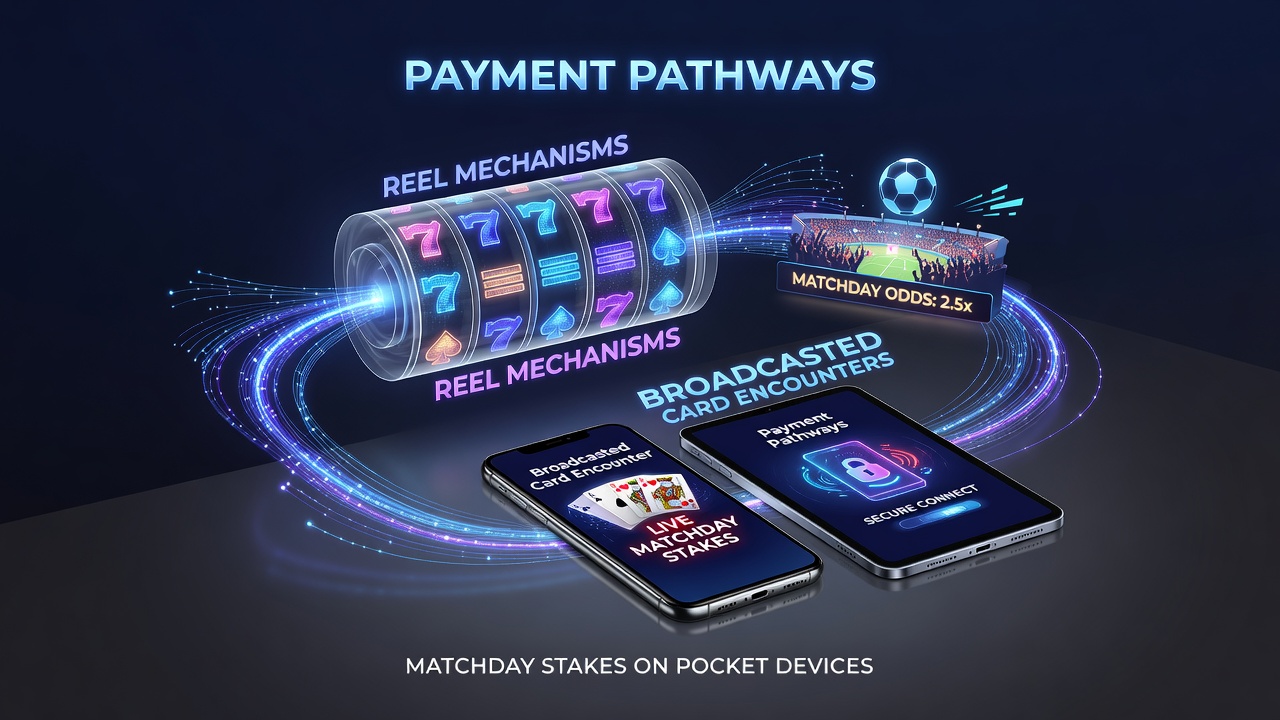
Payment systems now route funds between spinning reel mechanics, streamed table encounters, and live match wagers on handheld screens, creating unified transaction flows that handle deposits and withdrawals across all three formats without separate accounts. Developers have built these pathways around instant bank transfers, digital wallets, and card processors that recognize game type codes in real time, allowing a single balance to fuel spins on five-reel titles, place side bets during broadcast blackjack, and lock in point spreads for evening fixtures.
Core Mechanics of Cross-Format Transfers
Transaction processors tag each incoming payment with metadata that identifies the originating device and intended product category, then route the credit to the appropriate ledger while maintaining a shared player wallet visible across apps. Operators configure these ledgers so that funds deposited via mobile banking apps appear instantly in slot sessions, live dealer lobbies, and sports betting dashboards simultaneously. When a user switches from a reel game to a streamed card table, the system updates the available balance in milliseconds because the backend treats every format as a single account rather than isolated modules.
Wallet Architecture Supporting Multiple Verticals
Modern mobile platforms employ centralized wallet engines that communicate with payment gateways through standardized APIs, enabling seamless movement between reel mechanisms that accept micro-bets and broadcast card encounters that require larger stakes for side wagers. Sportsbooks integrated into the same ecosystem pull from the identical balance to cover matchday stakes while returning winnings directly into the shared pool. Data from payment processors shows that sessions involving two or more verticals generate higher average transaction volumes than single-product play, because users move winnings between formats without cashing out to external accounts.
June 2026 Platform Updates and Regional Patterns
In June 2026 several operators rolled out updated routing protocols that reduced latency between live dealer confirmations and sports bet settlements on the same device. These changes coincided with expanded support for regional payment methods including instant bank transfers in North America and digital wallet options popular across Asia-Pacific markets. Observers note that transaction success rates improved after the updates, particularly for users alternating between slot reels and in-play football wagers during major tournaments.

Regulatory frameworks outside the United Kingdom have influenced these developments, with bodies such as the iGaming Ontario requiring clear separation of player funds from operational accounts while still permitting integrated wallets. Similar rules appear in Australian state licensing regimes, where operators must demonstrate that payment pathways do not obscure responsible gambling limits across product types.
Security Protocols and Verification Layers
Encryption standards applied at the payment gateway level now cover data exchanges between reel servers, streaming card platforms, and sports betting engines, ensuring that account details remain protected during rapid format switches. Multi-factor authentication triggers when users attempt large transfers between verticals, yet smaller routine movements between a slot session and a live dealer table often proceed with device-level biometrics alone. Industry reports from the American Gaming Association indicate that fraud detection systems flag fewer cross-product transactions than expected, largely because pattern recognition models treat combined reel, table, and sports activity as normal user behavior.
Settlement Speed Across Game Types
Withdrawals initiated after a winning streak that spans slot payouts, live dealer wins, and sports results typically clear within the same timeframe as single-vertical requests, because the payment pathway consolidates all balances before processing the outbound transfer. Some platforms batch these requests overnight to reduce processor fees, while others release funds immediately when the total remains below a defined threshold. Players who move winnings between formats before cashing out avoid repeated verification steps that standalone withdrawals often require.
Future Integration Trends
Developers continue testing ledger systems that incorporate loyalty points earned on reels directly into live dealer buy-ins or sports stake multipliers, all handled through the same payment rail. These experiments rely on real-time reconciliation engines that update point balances whenever a user shifts between products on a single device. Research papers from academic gaming centers have begun examining how such unified pathways affect player session length and deposit frequency, though comprehensive longitudinal data remains limited.
Conclusion
Payment pathways that connect reel mechanisms, broadcast card encounters, and matchday stakes on pocket devices have evolved into coordinated networks rather than separate channels, supported by metadata tagging, shared wallets, and region-specific compliance standards. Continued refinements in June 2026 and beyond will likely focus on faster settlement across formats while maintaining the verification layers already embedded in current systems.