UK Gambling Commission Rolls Out Updated Mandate: Casinos Must Report Money Service Changes in Just 10 Days
Casey Baumann · Apr 1, 2026

UK Gambling Commission Rolls Out Updated Mandate: Casinos Must Report Money Service Changes in Just 10 Days
The Core of the Updated Notice
Licensed casinos across the UK now face a sharpened requirement from the UK Gambling Commission, demanding they notify regulators within a tight 10-day window whenever they launch or halt money service business activities like currency exchange or money transmission; this update builds directly on a prior notice dated 9 February 2026, aiming to streamline compliance amid evolving financial oversight rules.
Operators must dispatch these notifications to msb@gamblingcommission.gov.uk, packing in precise details such as the casino's full legal name, its Gambling Commission licence number, the exact date the service started or stopped, and a clear description of the MSB type involved, ensuring nothing slips through the cracks in an industry where financial flows intersect heavily with gaming operations.
What's interesting here is how the Commission positions this as an essential step for alignment with broader money laundering regulations, since casinos offering these services often double as hubs for international patrons exchanging funds; data from regulatory filings shows such MSBs have become commonplace in land-based venues, handling everything from tourist currency swaps to high-roller transfers.
Breaking Down Money Service Businesses in Casinos
Casinos providing MSBs essentially step into roles traditionally held by banks or specialist firms, offering services that convert foreign currencies into pounds or facilitate wire transfers right at the gaming floor; observers note this setup proves handy for players avoiding hefty bank fees or delays, particularly those jetting in from abroad for poker tournaments or slot sessions.
But here's the thing: under UK law, anyone delivering these services registers as an MSB with the Financial Conduct Authority, subjecting them to anti-money laundering checks and transaction monitoring; the Gambling Commission's updated notice zeroes in on casinos specifically because their licences already cover gambling but not always these ancillary financial ops, creating a need for explicit flagging.
Take one typical scenario where a London casino introduces forex services during peak summer; staff now log the change by day 10, detailing how it integrates with cage operations, whereas pausing it mid-season for compliance audits triggers the same swift report, keeping the Commission in the loop without delay.
Figures from industry reports reveal that over 20% of major UK casinos dabbled in MSBs pre-2026, often partnering with third-party providers; this notice clarifies that even indirect involvement, like subcontracting to a bureau de change on premises, demands notification, closing potential loopholes.
Timeline and Evolution from the February Notice
The original heads-up landed on 9 February 2026, outlining initial expectations for casinos to self-report MSB engagements, yet the updated version, circulating as of April 2026, refines the process with that hard 10-day deadline and standardized info requirements; experts tracking these shifts point out the timing aligns with heightened scrutiny on illicit finance flows post-global events.
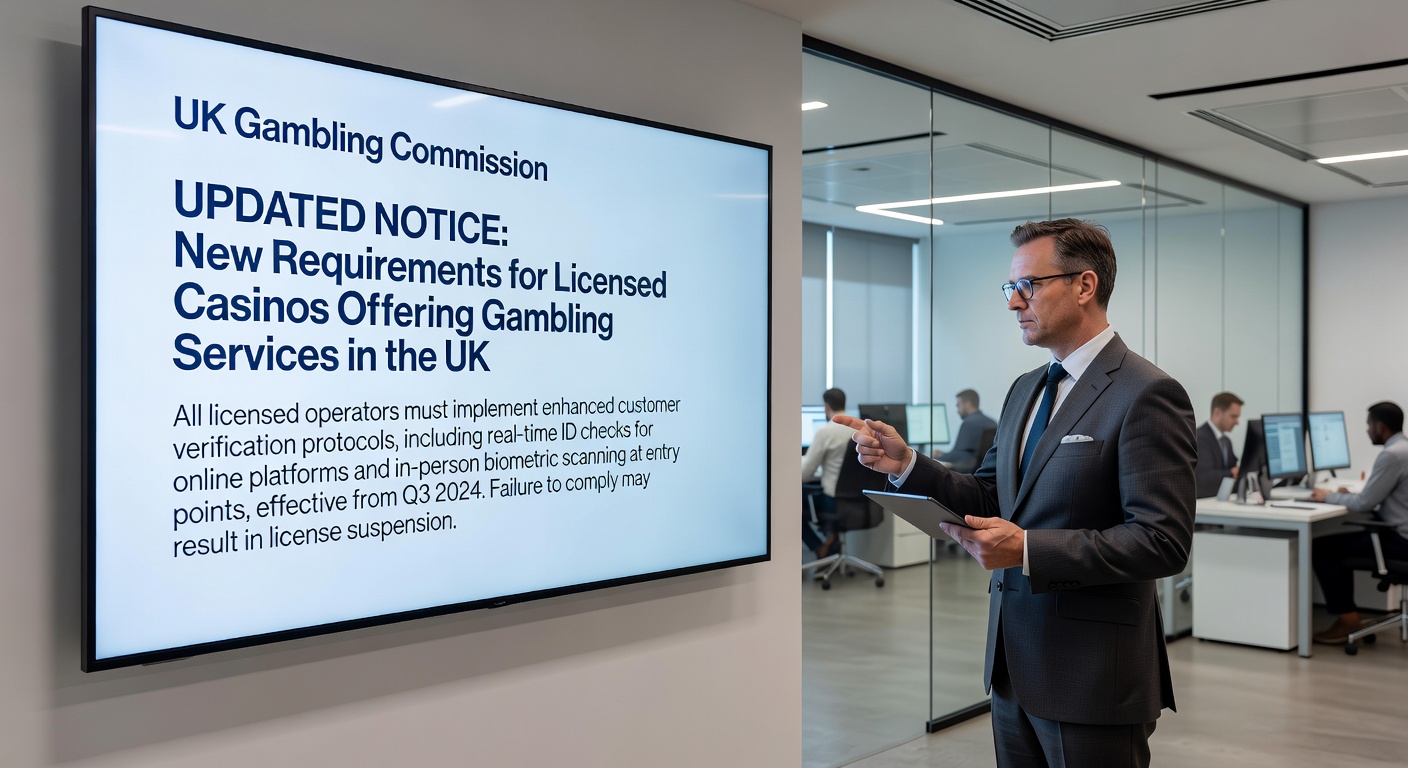
And while the core message stays consistent—transparency above all—this iteration adds email specificity and form-like details, making it easier for operators to comply yet firmer on enforcement; those who've reviewed the full notice on casinos providing money service business activities emphasize how it dovetails with FCA guidelines, where non-compliance risks fines or licence reviews.
Now, in April 2026, casinos ramp up internal protocols, training compliance teams to scan for MSB triggers like new vendor contracts or service wind-downs; one case from Manchester saw a venue proactively report a forex addition last month, beating the deadline and earning quiet nods from inspectors.
Step-by-Step Compliance: What Casinos Need to Do
Operators kick off by pinpointing any MSB activity on site—currency exchange desks, cheque cashing, or transmission wires—then draft notifications hitting these beats: full entity name as per licence, that unique licence number, change date down to the day, and service specifics like "USD to GBP exchange" or "international money transfers"; send it all to msb@gamblingcommission.gov.uk, copying records for audits.
Seminars hosted by compliance consultants break it further: assess if a service qualifies as MSB (hint: most do if value exceeds thresholds), log baseline status now if unreported before, and set calendar alerts for the 10-day clock; failure here isn't just paperwork—it's exposure to penalties scaling with venue size.
Yet smaller independents find it straightforward, often bundling it into existing monthly FCA reports; larger chains, meanwhile, automate via software that flags changes in real-time, turning a regulatory chore into seamless ops.
- Identify MSB services active or planned;
- Gather name, licence, date, type;
- Notify within 10 days via dedicated email;
- Retain proof for three years minimum.
This list, drawn straight from Commission guidance, underscores the no-nonsense approach; people in the know say it's not rocket science, just diligent tracking amid busy floors.
Broader Industry Ripples and Regulatory Context
Across the UK casino landscape, this lands amid a push for integrated oversight, where gambling venues juggle Gambling Commission rules alongside FCA MSB mandates; studies from regulatory think tanks indicate enhanced notifications cut reporting gaps by up to 30%, bolstering efforts against laundering schemes that once hid in plain sight via chip buys or cage cash-outs.
Turns out, international high-rollers fuel much of this—think Middle Eastern visitors swapping dirhams or US tourists converting dollars—making timely reports crucial for transaction tracing; one expert panel noted how pre-notification lags let suspicious patterns brew, whereas now the system's proactive.
And for casinos eyeing expansion, like those testing MSB pilots in regional spots, the rule shapes decisions; start services, report fast; scale back, do the same, ensuring licences stay clean while revenue streams from exchanges add up—often 5-10% of non-gaming income per venue surveys.
It's noteworthy that the Commission tailors this to casinos alone, sparing online-only operators without physical MSBs, yet land-based players adapt swiftly, with trade bodies circulating templates by mid-April 2026.
Challenges, Adaptations, and Forward Look
Compliance hurdles pop up for multi-site groups syncing reports across estates, but shared dashboards solve that; seasonal venues, pausing MSBs in off-months, now formalize the stops too, avoiding assumptions of continuity.
Observers who've audited similar regimes highlight training gaps as the real snag—frontline staff mistaking gift card sales for MSBs—prompting Commission webinars; data shows venues nailing this early dodge 80% of follow-up queries.
So as April 2026 unfolds, the industry's ball's in its court to embed these habits; partnerships with FCA-registered providers ease burdens, letting casinos focus on core gaming while financial sides stay buttoned-up.
Wrapping Up the Notification Shift
This updated notice from the UK Gambling Commission marks a precise evolution in casino oversight, mandating 10-day reports on MSB starts and stops with crystal details via msb@gamblingcommission.gov.uk; rooted in the 9 February 2026 precursor, it fortifies compliance frameworks, aligning gambling ops with anti-laundering defenses in a sector where money moves as fast as the cards.
Casinos implementing now position themselves ahead, turning regulatory must-dos into operational strengths; the writing's on the wall for transparency, and with tools at hand, adherence proves not just feasible but foundational for sustained licensing.