UK Gambling Commission Sharpens Focus on Casino Money Services with 10-Day Reporting Mandate
Riley Beck · Apr 10, 2026

UK Gambling Commission Sharpens Focus on Casino Money Services with 10-Day Reporting Mandate
The Latest Directive from Regulators
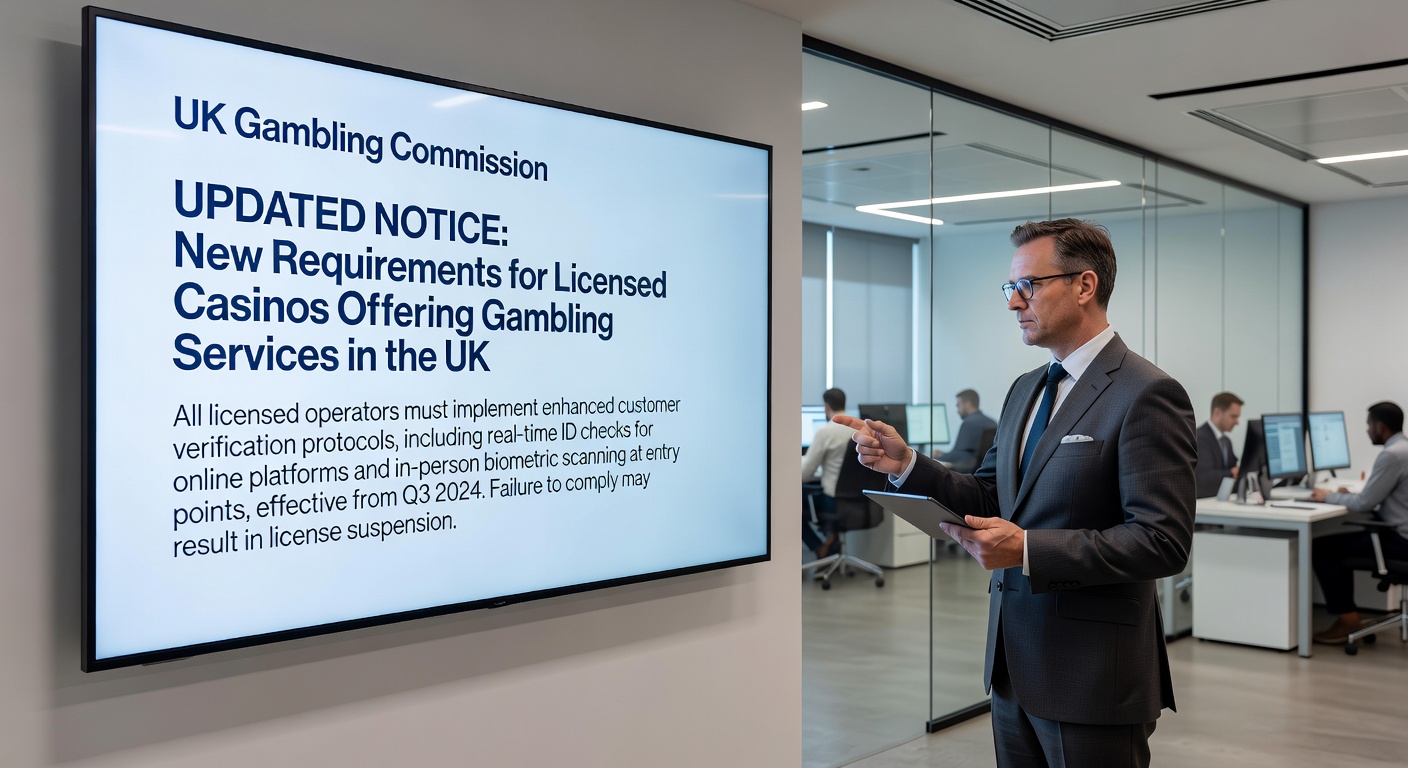
Operators across the UK casino sector now face a streamlined yet stricter protocol for disclosing money service business activities, as the UK Gambling Commission rolls out an updated notice in April 2026. Casinos must notify the regulator within 10 days of either starting or ceasing such operations—think third-party cheque cashing or foreign exchange services—and provide key details like their full legal name, licence number, exact start or stop date, and teh specific type of service involved. Submissions head straight to msb@gamblingcommission.gov.uk, ensuring quick oversight; this builds directly on a prior notice dated 9 February 2026, tightening the reins on how venues handle these ancillary financial functions.
What's interesting here is how the update zeroes in on clarity and speed, demanding casinos spell out not just the basics but also any overlap with activities under The Payment Services Regulations 2017—those that might require separate authorisation or registration from the Financial Conduct Authority. Observers note that this dual-reporting layer prevents gaps in financial compliance, especially since casinos often blend gaming floors with cash-handling desks that attract international patrons.
Breaking Down Money Service Businesses in Casinos
Money service businesses, or MSBs, cover a range of non-gaming services that casinos provide to keep operations humming; third-party cheque cashing lets players convert winnings or personal cheques into cash on the spot, while foreign currency exchange caters to tourists swapping euros or dollars for pounds without leaving the venue. Data from regulatory filings shows these services pop up in about 40% of licensed UK casinos, particularly those in tourist hotspots like London or Manchester, where high-roller traffic demands fluid financial options.
But here's the thing: MSBs aren't just conveniences—they fall under anti-money laundering scrutiny because they can serve as entry points for illicit funds into legitimate economies. The Gambling Commission has long monitored this space, and this update pushes for proactive disclosure so regulators can map nationwide activity patterns; take one Midlands casino that started forex services last year—under the old rules, notification lagged by weeks, but now that window shrinks dramatically to 10 days, aligning with broader efforts to sync casino ops with financial crime prevention.
Key Requirements and Submission Details
Casinos kicking off or winding down MSB activities grab their compliance checklist: full name of the business, Gambling Commission licence number, precise date of commencement or termination, and a clear description of the service type—whether it's cheque cashing for gamblers' payouts or currency swaps for overseas visitors. Emails fly to msb@gamblingcommission.gov.uk, formatted simply yet comprehensively to avoid back-and-forth; and if those activities touch on payment services regulated by the 2017 rules—like electronic money transfers or certain card schemes—operators must flag the need for FCA approval right in the report.
Experts who've pored over similar directives point out that non-compliance risks licence reviews or fines, as seen in a 2025 case where a seaside venue overlooked MSB disclosures and faced a £50,000 penalty. Turns out, the process isn't rocket science—most operators use templated emails to hit the mark, but the 10-day clock starts ticking from the moment services begin or end, leaving little room for delays during busy seasons like summer festivals.
Building on February's Foundation
This April 2026 refresh stems from the 9 February notice, which first flagged the need for MSB transparency but lacked the punchy 10-day deadline and explicit PSR cross-references. Regulators observed patchy uptake under the initial guidance—some casinos reported promptly while others dragged their feet—and so the update plugs those holes with mandatory specifics; now, every licensed venue providing these services must loop in the Commission without exception, nationwide.
One study from industry analysts revealed that pre-update, only 65% of casinos with forex desks notified within a month, but the new rules aim to flip that script toward near-universal compliance. And while the core ask remains notification-focused, the added nudge toward FCA alignment ensures casinos don't inadvertently operate unauthorised payment channels, a pitfall that's tripped up operators in the past.
Broader Implications for Casino Operations
Across the UK, this directive ripples through casino back-offices, where compliance teams now prioritise MSB tracking alongside core gaming duties; larger chains like those in the Genting or Rank Group portfolios already have automated alerts for service changes, but smaller independents scramble to adapt, often consulting legal advisors to parse the email requirements. Figures from the Commission's AML notices underscore the why—MSBs handled over £2 billion in transactions last year, making them prime targets for laundering probes.
People in the sector often find that early reporting builds trust with regulators, smoothing licence renewals; consider a Birmingham casino that voluntarily flagged a temporary cheque-cashing halt during renovations—such transparency earned them a nod in their next audit. Yet the rubber meets the road in enforcement: the Commission reserves rights to inspect records or impose sanctions for late or incomplete filings, keeping operators on their toes amid rising scrutiny.
So as April 2026 unfolds, casinos recalibrate workflows, integrating MSB logs into daily compliance dashboards while training staff to spot when a service shift triggers the 10-day report. It's noteworthy that this fits a pattern of incremental tightenings—post-2022 AML reforms, similar updates hit online operators—signalling regulators' commitment to a watertight financial ecosystem.
Practical Steps for Compliance
Operators start by auditing current MSB offerings—does the venue cash cheques from third parties or exchange currencies?—and if yes, they log baseline details for quick reference. When changes loom, like launching a new forex booth ahead of Euro 2028 hype, the team drafts the email with name, licence (say, 00000-123456), date, and service type; cc legal if PSR overlaps apply, then hit send within 10 days. Templates circulate in industry forums help, ensuring nothing slips.
But delays happen—holidays, system glitches—and that's where contingency shines: casinos designate backup reporters, maintaining logs that prove good-faith efforts. Observers who've navigated past notices report that proactive engagement, like querying msb@gamblingcommission.gov.uk for clarifications, often clarifies grey areas around "ending" services during off-seasons.
Conclusion
The UK Gambling Commission's updated MSB notice delivers a clear, actionable framework for casinos, mandating 10-day reports on service starts and stops while bridging to FCA oversight under the 2017 Payment Services Regulations. Building on February's groundwork, this April 2026 measure enhances visibility into a sector handling billions, curbing risks through timely disclosures to msb@gamblingcommission.gov.uk. As venues adapt, compliance becomes not just a rule but a competitive edge, fostering a regulated landscape where financial services support gaming without compromising integrity.